
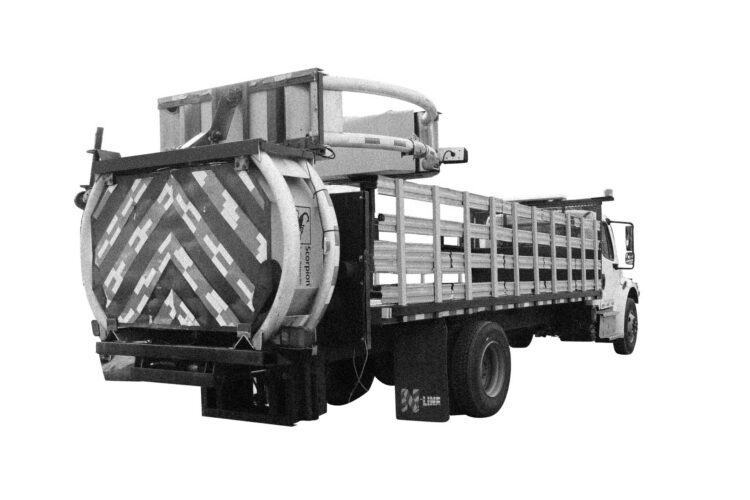
Every day, highway workers, utility crews, emergency responders, and motorists rely on a piece of equipment that often goes unnoticed until it’s needed most—the attenuator truck.
Also known as a Truck-Mounted Attenuator (TMA) truck or crash cushion truck, these specialized vehicles are designed to absorb the impact of collisions and protect workers operating in and around active roadways. Today, attenuator trucks are a standard safety feature in construction zones and highway maintenance operations, but their development is rooted in decades of innovation and a growing commitment to work zone safety.
The Early Days of Impact Protection
The concept behind modern attenuator trucks began in the 1950s with stationary impact attenuators. These devices were installed near fixed roadside hazards such as bridge supports, toll booths, and highway barriers to help absorb crash energy and reduce the severity of collisions. Their success demonstrated that controlled energy absorption could significantly improve driver survivability during roadway accidents.
As roadway construction projects expanded and traffic volumes increased throughout the United States, transportation agencies recognized the need for a mobile version of these protective systems.
The Birth of the Truck-Mounted Attenuator
In the early 1970s, engineers developed the first Truck-Mounted Attenuators (TMAs), combining impact-absorbing technology with support vehicles used in highway maintenance and construction operations. These mobile crash cushions could be positioned behind workers and equipment, creating a protective buffer between active traffic and work zones.
The introduction of TMAs represented a major advancement in roadway safety. Instead of relying solely on cones, signs, and barriers, crews now had a vehicle specifically designed to absorb the force of a rear-end collision.
Advancements Through Testing and Innovation
As attenuator trucks became more common, transportation agencies and manufacturers focused on improving their performance. Research throughout the 1980s and 1990s led to new designs that utilized materials such as aluminum honeycomb cartridges and specialized energy-absorbing systems to better manage crash forces. Extensive crash testing helped establish industry standards and improve overall reliability.
One major milestone came with the development of reusable attenuator systems that could withstand impacts more effectively while reducing repair and replacement costs. These innovations improved safety while making attenuator trucks more practical for agencies and contractors operating in high-traffic environments.
Standardization and Widespread Adoption
As research expanded, national guidelines were developed to help standardize the deployment and use of truck-mounted attenuators. These standards provided recommendations for where and how TMAs should be used to maximize worker protection in temporary traffic control zones.
Today, attenuator trucks are commonly used for:
- Highway construction projects
- Road maintenance operations
- Pavement marking and striping
- Bridge maintenance
- Utility work
- Incident management and emergency response
- Mobile lane closures
Their ability to absorb impact energy while protecting workers has made them one of the most important safety tools in transportation infrastructure operations.
Modern Attenuator Trucks
Modern attenuator trucks are the result of decades of engineering improvements. Today’s systems undergo rigorous crash testing and must meet strict safety standards before deployment. Manufacturers continue to develop lighter, more durable, and more effective attenuator designs that provide enhanced protection for both roadway workers and motorists.
In recent years, attenuator technology has even expanded beyond traditional highway construction. Emergency response agencies and fire departments have begun adopting TMAs to protect first responders operating at accident scenes and roadway incidents.
Researchers are also exploring autonomous truck-mounted attenuator systems that can follow maintenance vehicles without a driver, further reducing worker exposure to traffic hazards.
The Future of Roadway Safety
While attenuator trucks have evolved significantly since their introduction in the 1970s, their mission remains the same: protecting lives.
As infrastructure projects continue to grow and traffic volumes increase, attenuator trucks will remain a critical component of work zone safety strategies. Their history demonstrates how innovation, testing, and a commitment to worker protection can create safer roads for everyone.
Find the Right Attenuator Truck for Your Fleet
At Partner Equipment Sales, we understand the vital role attenuator trucks play in protecting crews and motorists. Whether you’re looking to expand your fleet or replace aging equipment, our team can help you find reliable, high-quality attenuator trucks that meet today’s safety standards.
Contact Partner Equipment Sales today to learn more about our available attenuator truck inventory and roadway safety solutions.
Contact Partner Equipment Sales today to learn more.